Now published in the three languages
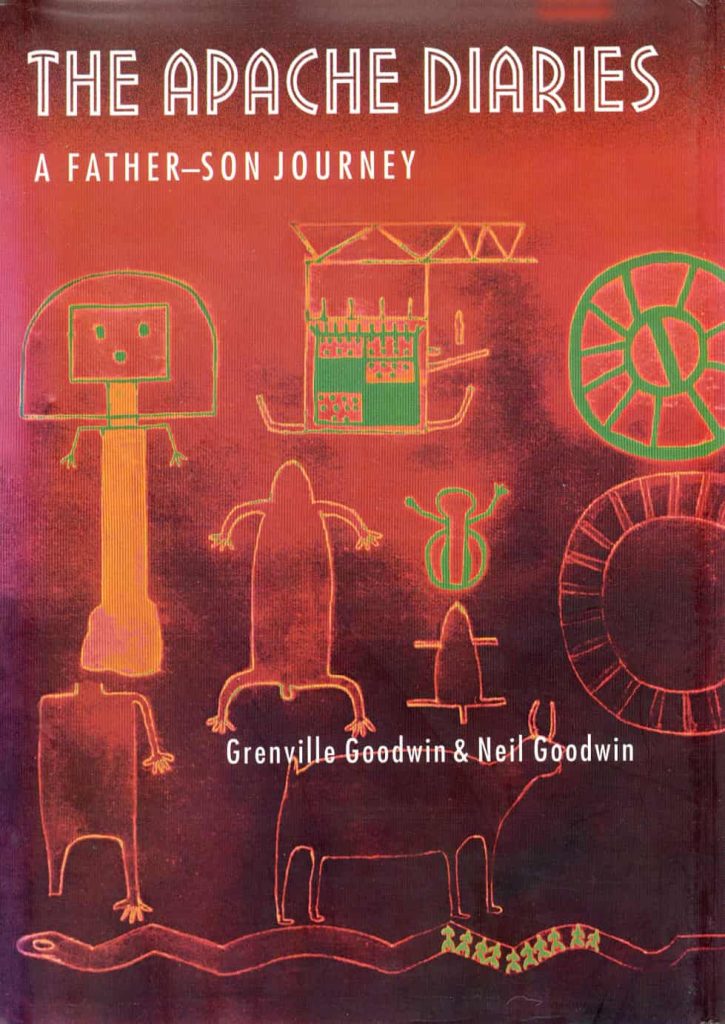
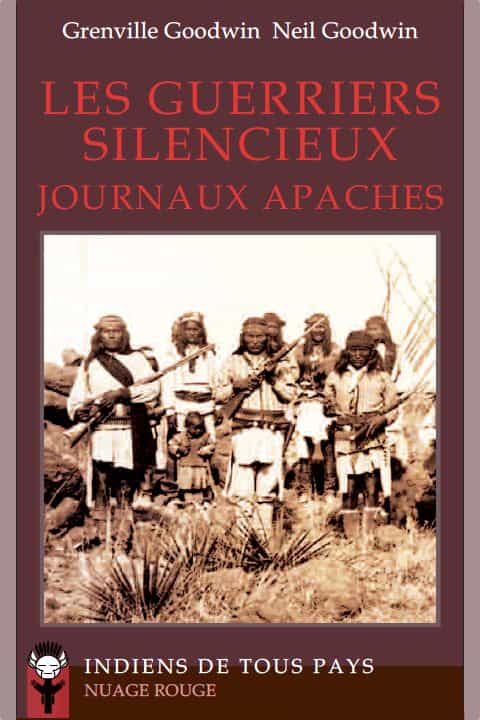
The Apache Diaries: A Father-Son Journey
“I never knew my father. A tumor killed him soon after I was born. Though I can recite an abundance of biographical fact, what died with him is lost to me forever.”
In an attempt to make his image whole I have undertaken this book. It is an exploration, and, like all explorations, and all journeys, I begin it without any certainty of where it will lead —all the more so because it is an exploration of two mysteries. One is my father. The other is a mystery that he once tried to solve himself: who are Lupe’s people, the phantom Apaches of the Sierra Madre?
Historical Perspective
The surrender of Geronimo in 1886 did not mark the end of Apache resistance to white encroachment. Over the next four decades, rumors persisted about a band of “wild” Apaches in the Sierra Madre Mountains of northern Mexico. Soon after the turn of the century, accounts of captured children and bloodshed marked an escalating violence in the remote mountains, culminating in a sensational murder and kidnapping in 1927. Who were these reclusive Apaches? In 1930 my father, a young student of anthropology, 22, headed south from Arizona to find out. Accompanying him were guides who had often encountered the Apaches, and as they searched out abandoned campsites, the Apaches were quite likely watching them.
He went on to (1907 – 1940) become a well-known and respected ethnographer of the Apaches. He was the author of The Social Organization of the Western Apache; Myths and Tales of the White Mountain Apache, Western Apache Raiding and Warfare.
I was born three months before my father’s death in 1940. He left meticulous journals chronicling this epic search and I have edited and annotated the journals to engage in a dialogue with the father I never knew. Retracing my father’s journeys, picking up the old, cold trail I juxtapose my own journal entries with his, creating a conversation and common ground between us while exploring some mysteries of the enduring Apache presence on both sides of the border.
Reviews and Comments
“With steadily gathering force, the amazing story unfolds of two exceptional men, father and son, each on his own quest. And always one feels the haunting presence of the Apache, their world and their mysteries”. –David McCullough
“A son’s longing determination to know his enigmatic father, and the brutal war waged upon a small, resourceful band of Apache, are the stuff of a terrific read that at times left me breathless with sorrow.”–Louise Erdrich.
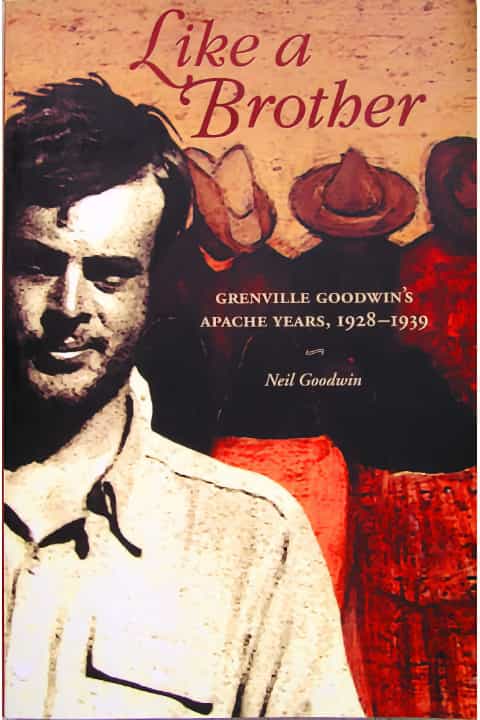
Like a Brother: Grenville Goodwin’s Apache Years, 1928–1939
When the anthropologist Grenville Goodwin died in 1940 at the age of 32, he had published several papers and one book, Myths and Tales of the White Mountain Apache, and had already achieved a stature that has only continued to grow. His posthumous landmark monograph, The Social Organization of the Western Apache, was hailed by anthropologist Edward Spicer as “one of the most detailed and best-documented studies of Indian social organization”. Yet, although he was highly regarded by colleagues within the profession, Goodwin himself was largely self-taught, with neither formal training nor academic degrees. This volume is the latest in series of books derived from his unpublished papers. It helps broaden our understanding of Goodwin’s life and work. It includes selections from his field notes, diaries, and letters, along with those of his wife Jan and other family members. Assembled by Goodwin’s son Neil, who never knew his father, these writings are gathered in thematic chapters that extend Neil Goodwin’s earlier work, The Apache Diaries, and shed light on Grenville Goodwin’s deepening understanding of the Apache people and their culture, and of the wrenching problems which reservation life forced on them.
Published by the University of Arizona Press
Available on-line:
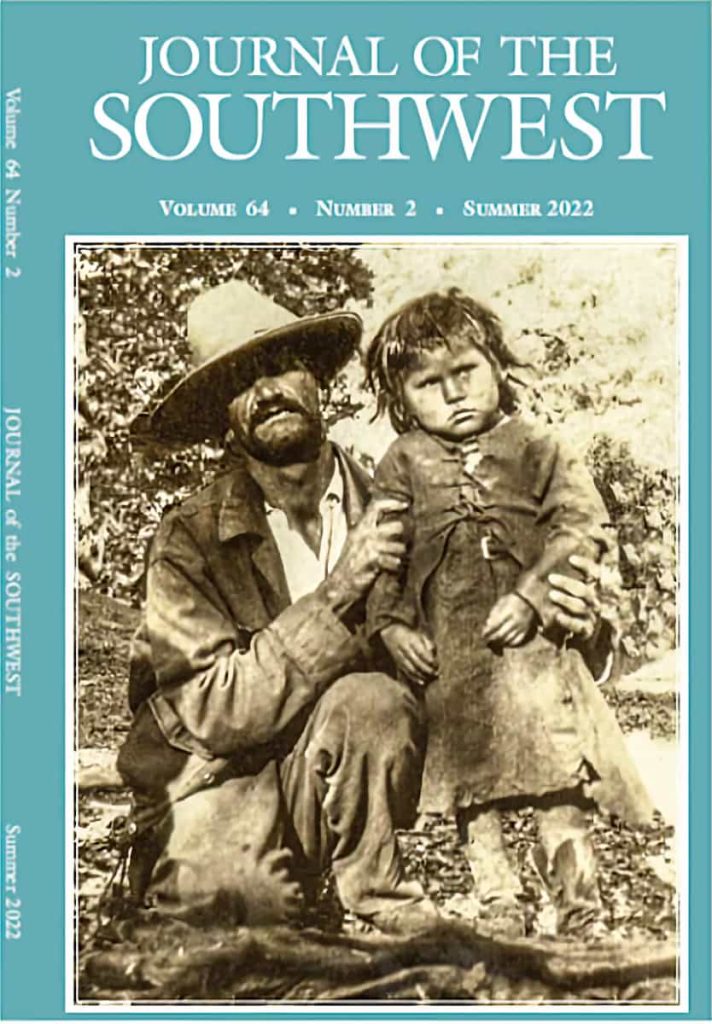
Journal of the Southwest
IN SEARCH OF THE APACHES OF THE SIERRA MADRE
The photograph on the cover of this issue of the Journal of the Southwest was taken in Mexico in 1932. At the time Apaches were shot on sight. This man had just shot and killed an old Apache woman high in the mountains and this was her granddaughter, 3 years old. The child was brought to Nacori Chico, the nearest town where she was adopted by Jack and Dixie Harris, an American couple living there at the time. She was one of the last survivors of a fugitive people, Apaches living in the wilds of the Sierra Madre, as they had for centuries, and her story unfolds here, told by her adoptive sister. The story begins in Mexico and ends in Italy.
This story is one in a collection of eye-witness, first person narratives related to the of life in the Sierra madre to the Apaches of the Sierra Madre in northern Mexico in the late 19th and early 20th century. These first hand accounts are about captive Apache children, and about ranching life in the mountains, shared with the almost never-seen Apaches.
In addition to these, the book contains a unique collection of the voices of 8 descendants of Apaches living in Mexico and in American border communities with narratives of their own gathered by the author in extended conversations. These people grew up knowing their identity, but keeping it hidden and melting in to Hispanic communities. Recently there has been movement among these descendants on both sides of the border to reclaim their identity , culture and history. These are only a few of the many voices to be heard now.
Published by the Southwest Center, University of Arizona, Tucson. To access digital issue: